

Glass ceiling. So far in her presidential campaign, Kamala Harris has mostly talked about the issues rather than the possibility that she’ll be the U.S.’s first female president. Perhaps she was just waiting for the right messenger. That person showed up Monday when Hillary Clinton delivered a full-throated endorsement of Harris that put her nomination in historical context at the opening night of the Democratic National Convention.
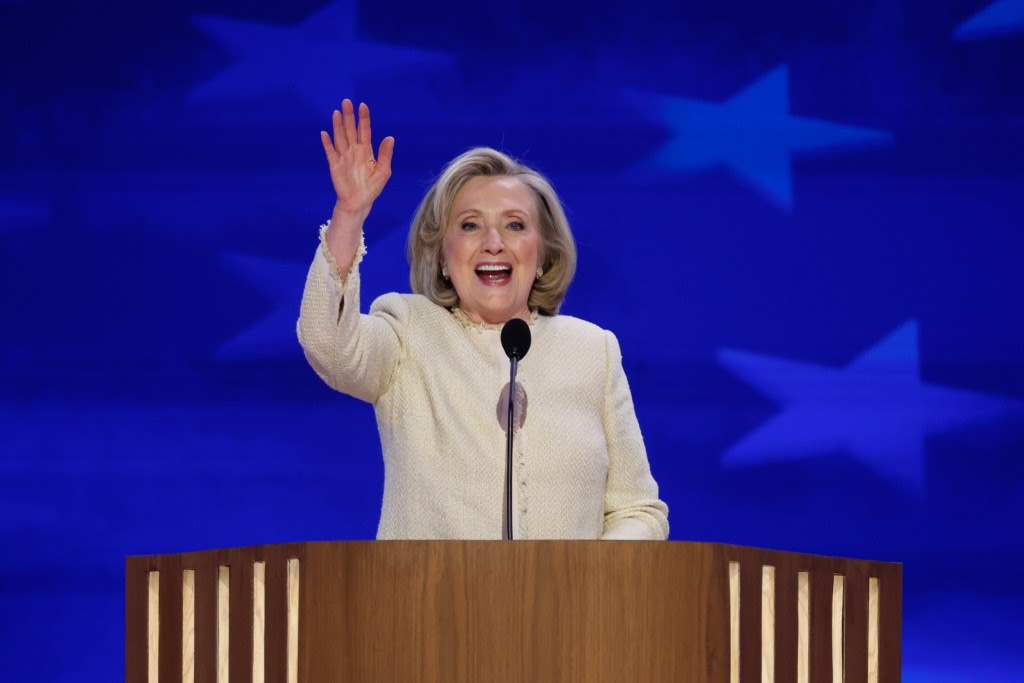
Clinton was of course expected to become the first female U.S. president in 2016 before her shocking loss to Donald Trump. While President Joe Biden also spoke last night to pass the torch to Harris, in a way, Clinton’s endorsement did the same. The glass ceiling she so often spoke of during her 2016 campaign is now Harris’s to break through. “On the other side of that glass ceiling is Kamala Harris taking the oath of office as our 47th president of the United States,” Clinton told the cheering crowd.
Clinton placed Harris’s nomination in the context of her own campaign. After all, Harris is up against the same opponent. Trump has mocked Harris’s name and her laugh, Clinton noted. “Sounds familiar,” she joked. But the former secretary of state also put Harris’s candidacy in historical perspective, going back to women earning the right to vote, to Shirley Chisholm’s 1972 run for the presidency, to Geraldine Ferraro’s 1984 run as vice president.
Hillary Clinton rallied the crowd to help Kamala Harris crack the glass ceiling at the Democratic National Convention’s opening night.
“It still takes a village to raise a family, heal a country, to win a campaign,” Clinton said in a nod to her famous line.
“When a barrier falls for one of us, it falls and clears the way for all of us,” Clinton said. Clinton has proven that is true; she was the first woman to be her party’s general election nominee for president so that path was cleared for Harris. Clinton was also the first woman to win the popular vote. If Harris wins the White House, she’ll shatter the ceiling that Clinton first cracked.
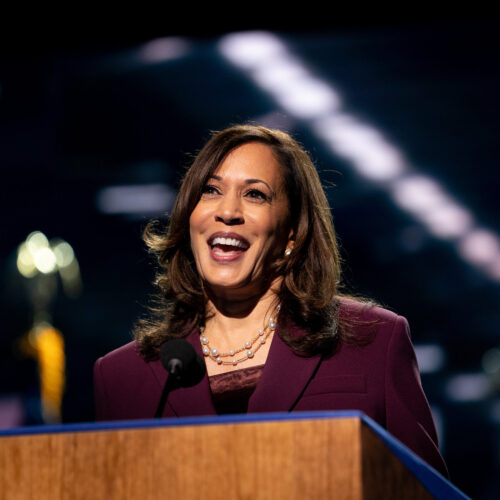
Kamala Harris, as of now, serves as the Vice President of the United States, having made history as the first female Vice President, the highest-ranking female official in U.S. history, and the highest-ranking Black and South Asian American official in U.S. history. This is a significant milestone in American and global politics, underscoring a major shift towards greater representation and diversity in political leadership.
During her campaign for Vice President in 2024, Harris did not explicitly position herself as the “world’s first superpower woman leader” or make claims about being the future U.S. President. Instead, her campaign was built on broader issues such as combating climate change, addressing economic inequality, expanding healthcare, and promoting justice and equality. Her focus was on articulating a vision for addressing key national and international challenges rather than framing her candidacy in terms of being a pioneering female leader.
Harris’s achievements as Vice President have positioned her as a significant figure in U.S. and global politics. Her role involves representing the U.S. on the world stage, contributing to policy discussions, and influencing international relations. While her historical significance as a female leader in a superpower nation is undeniable, her direct claim to being the “world’s first superpower woman leader” is more a matter of perception and context rather than a specific assertion she made during her campaign or in office.
As of now, Kamala Harris has not served as President, so any discussion about her being a superpower leader in that context remains speculative. Her potential future in higher office, including possibly the presidency, would further amplify her role in global leadership, but this has not yet materialized.
The term “superpower leader” often refers to someone who holds a position of immense influence and power on a global scale. In this sense, Harris’s current role as Vice President already places her in a position of significant global influence, but the title of “superpower leader” in its most complete sense would refer to a position of ultimate executive authority, such as the presidency, which is not yet part of her official record.
Kamala Harris has made significant strides in breaking barriers and setting new precedents in U.S. politics, but her current role as Vice President does not yet encompass the title of “world’s first superpower woman leader” in the sense of holding the presidency or making such claims during her campaign.
