- Horseshoe Falls (the largest and most famous): approximately 167 feet (51 meters) high.
- American Falls: about 70 to 110 feet (21 to 34 meters) high.
- Bridal Veil Falls: similar in height to the American Falls, around 78 feet (24 meters).
Danger of Falling Over in a Barrel:
Falling over Niagara Falls in a barrel is extremely dangerous and life-threatening. Historically, several people have attempted to go over the falls in a barrel or other protective devices, with mixed outcomes. Here are some factors that make it dangerous:
- Impact Force: The drop from the top of the falls creates a tremendous impact when the barrel hits the water below, which can cause severe injury or death.
- Turbulent Waters: The waters at the base of the falls are highly turbulent, with strong currents, rocks, and whirlpools, making it difficult to survive even if the fall itself is survived.
- Hypothermia: The water in the Niagara River is cold, especially during certain times of the year, increasing the risk of hypothermia.
- Legal Consequences: Going over Niagara Falls in a barrel is illegal, and those who attempt it can face fines or other legal actions.
While a few people have survived the stunt, many others have not, making it an extremely risky and generally unadvised activity.

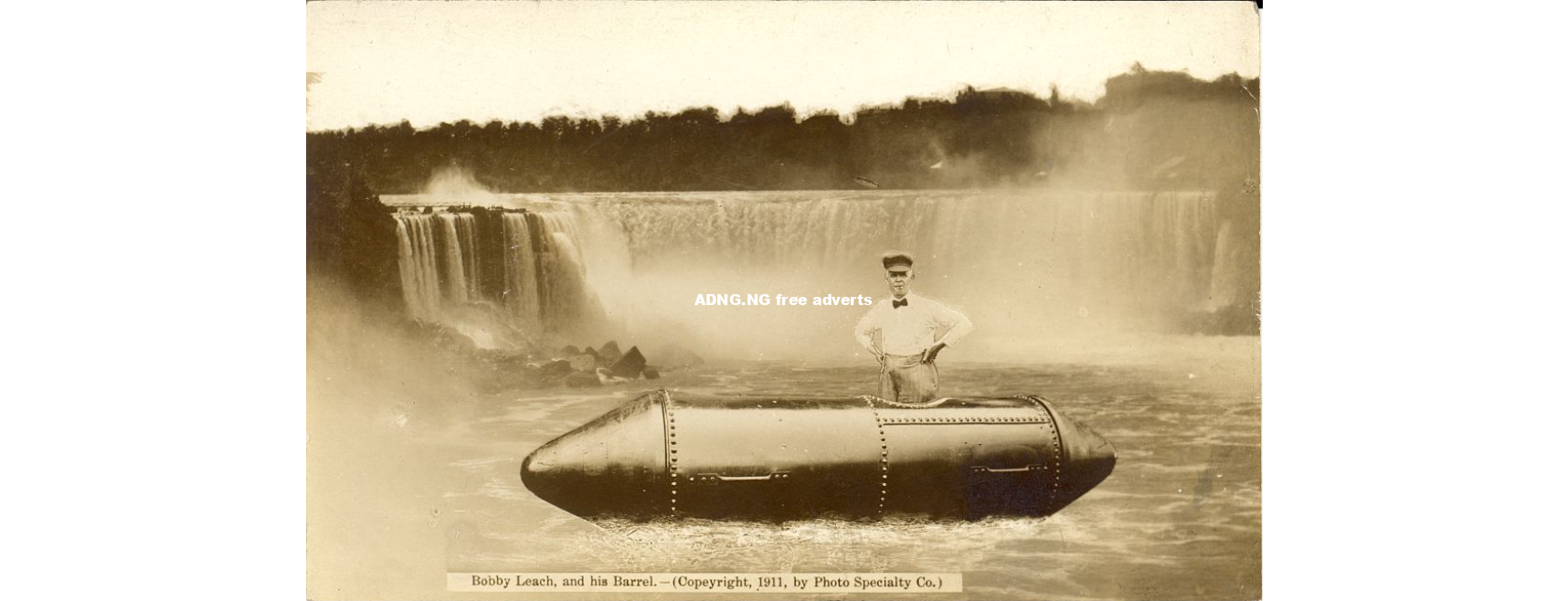
In 1911, Bobby Leach went over Niagara Falls in a barrel. On purpose.
He broke a few bones and spent a few months in the hospital.
But that was OK with him. He survived…
…and then he cashed in on his fame.
He wasn’t the first person to survive that fall. A woman named Annie Taylor owned that claim-to-fame. She purposely fell over the falls a few months before Bobby.
Annie made a few bucks speaking about her adventure, but never built a money-making publicity machine.
Bobby, on the other hand, traveled the world, exhibited the barrel, posed for pictures and boasted, “Anything Annie can do, I can do better.“
A few years after the big fall, Bobby brought his publicity tour to New Zealand.
While there, he slipped on an orange peel and injured his leg. The leg got infected. Gangrene set in. Amputation followed. Complications ensued. Bobby died two months later.
Ouch! Cahi !
Bobby learned the hard way: If you make your living by falling, past performance is no guarantee of future results.
Same is true if you’re marketing a business.
What worked for you yesterday, may injure, or even kill, your business today.
That’s why testing, tracking and tweaking are critical marketing practices.
I’ve been reading and writing marketing advice for more than 20 years.
A lot of the stuff I read — and wrote — doesn’t work as well as it once did. (I even purge content periodically from my blog if the advice is out-of-date).
I know what’s working because I measure results. I know if something worked better a few years ago than it works now.
Sure, if choosing between options, you may start with something that has worked in the past.
But remember: “No guarantee.”
Pay attention. Test and track to assess what works. Tweak to improve results.
Whatever you do, don’t sit on your laurels…
…and watch out for orange peels.